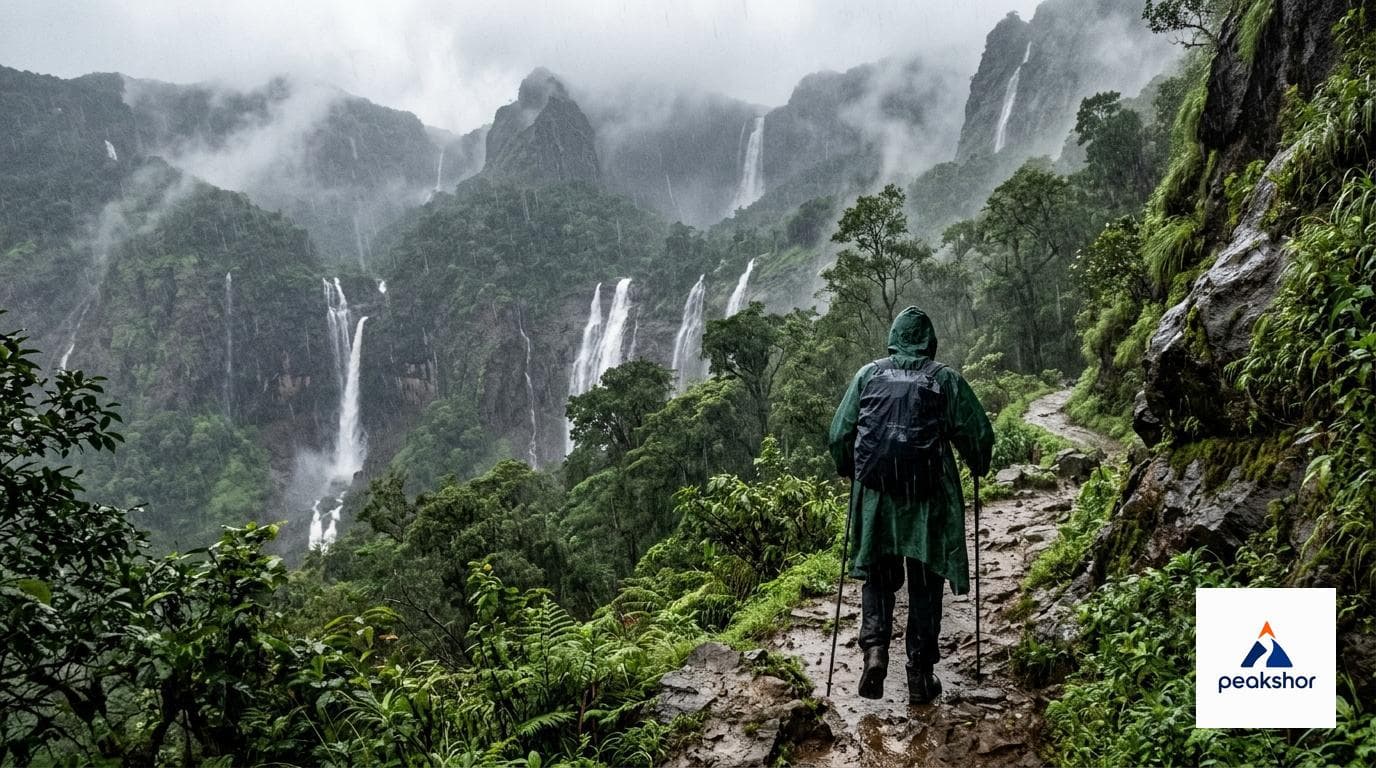
Monsoon Trekking Safety: 5 Ultimate Tips for Wet Trails
The Western Ghats transform into a lush green paradise during the rainy season. Waterfalls come alive, and mist covers the mountain peaks. However, navigating these trails in heavy downpours requires preparation. Prioritizing monsoon trekking safety ensures you enjoy the beauty of the hills without facing unnecessary risks.
In this guide, we will explore the essential rules for a safe, enjoyable journey. We cover everything from slippery paths to dangerous water crossings. Let us dive into the best practices for your next wet-weather adventure. Following these guidelines will keep you protected on every trail.
- Is It Safe to Trek in the Western Ghats During Monsoon?
- Essential Monsoon Trekking Safety Measures for Slippery Trails
- Mastering River Crossing Safety in Heavy Rains
- Must-Have Rain Trekking Gear for the Wet Season
- Managing Leech Bites and Wildlife Encounters
- How Professional Guides Ensure Monsoon Trekking Safety
- Planning Your Western Ghats Monsoon Trek Safely
- Conclusion
Is It Safe to Trek in the Western Ghats During Monsoon?
Many outdoor enthusiasts wonder if a western ghats monsoon trek is safe. The short answer is yes, but only if you follow strict safety protocols. The heavy rain brings unique challenges to these ancient mountains. Trails become muddy, visibility drops, and streams swell quickly.
To maintain monsoon trekking safety, you must respect the power of nature. Trekking during a heavy downpour is very different from a winter hike. Landslides can occur on steep slopes. Rockfalls are common in narrow gorges. Therefore, you must assess the risk before heading out.
Understanding the terrain is key. The Western Ghats are older than the Himalayas. Their rocky surfaces become incredibly slick when wet. This is why standard safety measures must be elevated. Knowing your limits is the first step of safe exploration.
We highly recommend checking the official reports from the Indian Meteorological Department before your trip. If there is a red alert, cancel your trek immediately. No view is worth risking your life. By planning wisely, you can enjoy these hills safely.
Essential Monsoon Trekking Safety Measures for Slippery Trails
Slippery mud and wet rocks are the most common causes of trekking injuries. As water mixes with clay, trails turn into slides. To maintain monsoon trekking safety, you must adjust your walking style. Take shorter, deliberate steps. Keep your center of gravity low to maintain your balance.
Using trekking poles is a fantastic way to increase your stability. Poles act as extra limbs, helping you feel the ground ahead. They are essential for monsoon trekking safety on muddy descents. Never rush when walking downhill. Take your time and find stable footing before moving your next foot.
Avoid stepping on wet moss or smooth rocks whenever possible. Moss is incredibly slick and offers zero traction. Instead, look for rough gravel or firm patches of grass. By choosing your path carefully, you minimize the risk of painful falls. Remember, monsoon trekking safety depends heavily on your foot placement.
Footwear Choices for Wet Trails
Your shoes are your primary defense against slips. Wearing regular running shoes on wet trails is a recipe for disaster. You need shoes with deep lugs that grip wet mud. Look for footwear with good ankle support. This simple choice drastically improves your overall monsoon trekking safety on rugged slopes.
Additionally, make sure your shoes are well broken in before the hike. New shoes can cause painful blisters, which are harder to treat in wet conditions. Waterproof hiking shoes can keep your feet dry initially, but they can also trap water once submerged.
Mastering River Crossing Safety in Heavy Rains
Swollen streams are the most hazardous part of any wet-weather hike. A gentle brook can turn into a raging torrent within minutes. Practicing strict river crossing safety is crucial for your survival. If you cannot see the bottom of a stream, do not cross it.
For maximum monsoon trekking safety, never try to cross a fast-moving river alone. The force of rushing water is deceptively strong. Water reaching your knees can easily sweep you off your feet. Always look for wider, shallower sections of the stream where the water flows slower.
If you must cross, unbuckle your backpack hip belt first. If you slip, you need to discard your heavy pack quickly. This is a fundamental rule of river crossing safety that many beginners forget. Always cross at an angle, facing upstream against the current.
Using a sturdy branch or a trekking pole on your upstream side provides vital third-point stability. This technique allows you to test the water depth and rock stability before stepping forward.
When to Turn Back at a Stream
Never let peer pressure influence your decision at a water crossing. If a stream looks too deep or fast, turn back. Waiting for the water level to drop is a wise move. Practicing this level of caution is the hallmark of real monsoon trekking safety. Remember that a safe return is always the ultimate goal of any trek.
Must-Have Rain Trekking Gear for the Wet Season
Packing the right equipment can make or break your trip. Your rain trekking gear must be durable, waterproof, and lightweight. Wet clothes lead to chills, shivering, and hypothermia, even in tropical forests. Keeping dry is essential for your comfort and health.
To ensure monsoon trekking safety, always pack your clothes in waterproof dry bags inside your backpack. A standard backpack cover is not enough during heavy downpours. Water will eventually seep through the seams. Double-bagging your electronics and warm clothes is a smart precaution.
Your list of rain trekking gear should also include a high-quality poncho. Ponchos allow better ventilation than heavy rain jackets. This prevents you from sweating excessively while climbing. Additionally, bring a quick-dry towel and spare synthetic socks to change into when needed.
Avoid cotton clothing entirely on these wet treks. Cotton absorbs water and holds it against your skin, draining your body heat. Instead, choose synthetic fabrics like polyester or nylon which dry rapidly.
The Importance of a Whistle and Headlamp
Rain and fog reduce visibility in the mountains. Always carry a whistle and a waterproof headlamp in your pocket. These small tools are critical for monsoon trekking safety if you get separated from your group. A whistle can help others locate you in heavy rain when voices are drowned out. Make sure your headlamp has fresh batteries before you set off.
Managing Leech Bites and Wildlife Encounters
The wet season brings out many small forest creatures. Leeches are highly active on the forest floors of the Western Ghats. While their bites are not dangerous, they can cause panic and infections. Managing these pests is an important aspect of monsoon trekking safety.
Wear high-ankle shoes and pull your socks over your trousers. You can also wear specialized leech socks to create a physical barrier. Applying a mixture of salt, tobacco water, or antiseptic cream on your shoes helps repel them. If a leech attaches to you, do not pull it off forcefully.
Leech bites do not transmit diseases in this region. This is a comforting fact for many beginners. However, scratching an open wound with dirty hands can lead to secondary bacterial infections. Always carry small alcohol swabs and adhesive bandages in your first aid kit to treat any bites immediately.
Instead, apply a little salt or wait for it to detach naturally. Pulling it can leave the mouthparts inside your skin, leading to infections. Beyond leeches, watch out for snakes resting on dry rocks. Keeping your eyes on the path ahead is vital for monsoon trekking safety.
How Professional Guides Ensure Monsoon Trekking Safety
Professional guides play an indispensable role in outdoor adventures. They possess local knowledge that no map can replicate. Their presence ensures high levels of monsoon trekking safety for the entire group. They know which trails remain stable and which sections to avoid.
During heavy rain, guides continuously assess stream levels. They know the safe crossing points and carry rope for emergencies. Relying on their expertise is a wise monsoon trekking safety decision. They can also predict weather changes by observing wind patterns and cloud formations.
Furthermore, professional guides are trained in wilderness first aid. They know how to treat hypothermia, sprains, and cuts quickly. If you are new to the region, hiring a local guide is the best way to ensure your safety. Their experience makes your western ghats monsoon trek much more enjoyable.
Group Dynamics in Wet Weather
A good guide keeps the group together. They ensure that the slowest walker is never left behind. Maintaining a tight group formation is vital for monsoon trekking safety in misty conditions. Never wander off the main trail alone under any circumstances. If the fog becomes too thick, the guide may instruct the group to halt and wait for better visibility.
Planning Your Western Ghats Monsoon Trek Safely
Proper preparation is the foundation of every successful outdoor trip. When planning your western ghats monsoon trek, choose your route wisely. Avoid routes with multiple river crossings if heavy rains are predicted. Opt for well-marked trails that have shelter points along the way.
Always inform someone at home about your itinerary and expected return time. Cellular networks are highly unreliable in deep valleys. If an emergency occurs, having someone know your location is vital for monsoon trekking safety. Pack extra food and water in case your return is delayed by streams.
Check local news for forest department permissions before you travel. Some trails are closed during peak monsoons due to high risks. Respecting local regulations is a key part of monsoon trekking safety. By being a responsible hiker, you protect yourself and the beautiful environment around you.
Additionally, always keep a basic emergency kit with you. This should contain a lighter, space blanket, pocket knife, and some high-energy snacks. These small additions can be lifesavers if you are stranded overnight due to rising waters.
Final Checklist for a Safe Adventure
Before you step onto the trail, double-check your gear list. Ensure your phone is fully charged and stored in a waterproof pouch. Verify that your footwear has excellent grip. Making these final checks is an easy way to elevate your monsoon trekking safety standard. A few minutes of preparation can prevent hours of trouble on the mountain.
Conclusion
Trekking during the rainy season is an unforgettable experience. The mist, the rain, and the vibrant greenery create a magical atmosphere. However, you must never compromise on safety. By following these rules, you can enjoy the mountains responsibly.
Remember that monsoon trekking safety is a continuous process. It starts with checking weather reports and ends when you return home safely. Equip yourself with proper gear, respect the local rivers, and hire guides when necessary. Your next rainy-day trek in these majestic hills awaits you.
Read enough — ready to actually go?
Browse destinations